
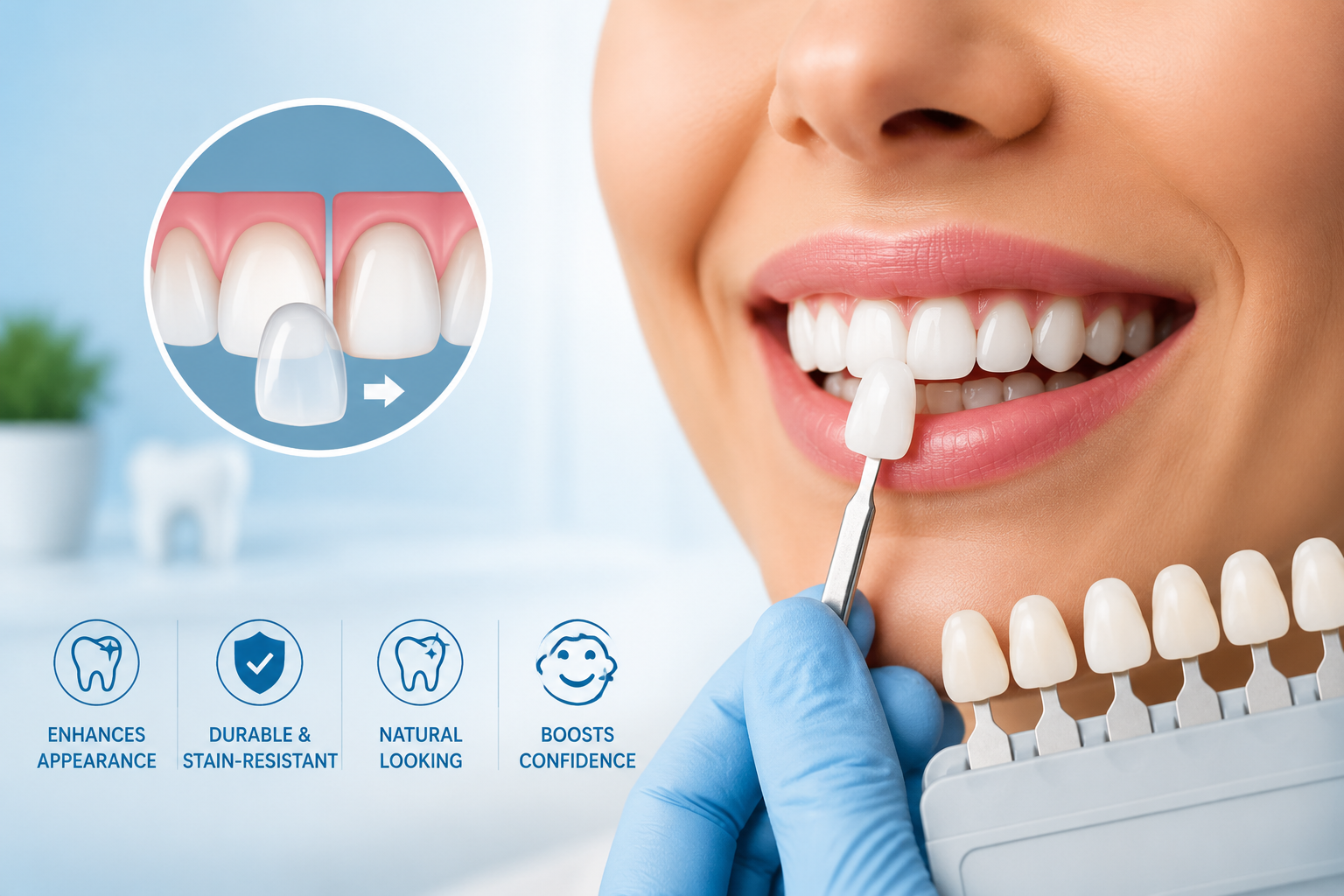
A bright, confident smile can make a lasting impression. If you’ve ever felt self-conscious about chipped, stained, uneven, or gapped teeth, dental veneers may be a solution worth considering. Veneers have become one of the most popular cosmetic dental treatments because they can dramatically improve the appearance of your smile while maintaining a natural look.
Before making a decision, it’s important to understand what veneers are, how the procedure works, their benefits, and what to expect throughout the process. This guide covers everything you need to know before getting veneers so you can make an informed choice about your smile.
What Are Dental Veneers?
Dental veneers are thin, custom-made shells that are bonded to the front surface of teeth to improve their appearance. They are designed to mimic the look of natural teeth and can address a variety of cosmetic concerns.
Veneers are commonly made from:
Porcelain Veneers
Porcelain veneers are known for their durability, stain resistance, and natural appearance. They closely resemble natural tooth enamel and can last many years with proper care.
Composite Veneers
Composite veneers are created using tooth-colored resin material. They are generally more affordable than porcelain veneers and can often be completed in fewer visits.
Both options can provide excellent cosmetic results, but your dentist can help determine which is best suited to your needs and goals.
What Can Veneers Fix?
One of the reasons veneers are so popular is their versatility. They can address several common smile concerns, including:
- Chipped teeth
- Cracked teeth
- Discolored or stained teeth
- Uneven teeth
- Small gaps between teeth
- Slightly crooked teeth
- Worn-down teeth
- Misshapen teeth
For patients seeking a smile makeover without extensive orthodontic or restorative treatment, veneers can often provide a faster cosmetic solution.
Are You a Good Candidate for Veneers?
While veneers are an excellent option for many people, they are not suitable for everyone.
You may be a good candidate if you:
- Have healthy teeth and gums
- Want to improve the appearance of your smile
- Have cosmetic concerns such as discoloration or minor misalignment
- Practice good oral hygiene
- Have sufficient enamel for veneer placement
However, veneers may not be ideal if you have:
- Active gum disease
- Significant tooth decay
- Severe teeth grinding (bruxism)
- Major bite alignment issues
A comprehensive dental examination can determine whether veneers are the right solution for your specific situation.
The Veneer Consultation Process
The first step toward getting veneers is a consultation with your dentist.
During this appointment, your dentist will:
- Evaluate your oral health
- Discuss your smile goals
- Examine your teeth and gums
- Take photographs or digital scans
- Review treatment options
This consultation is an opportunity to ask questions and gain a clear understanding of what results you can realistically expect.
What Happens During the Veneer Procedure?
Many patients are surprised to learn that the veneer process is relatively straightforward.
Step 1: Treatment Planning
Your dentist will carefully design your new smile based on factors such as tooth shape, facial features, and personal preferences.
Step 2: Tooth Preparation
For porcelain veneers, a small amount of enamel is typically removed from the front surface of the teeth. This allows the veneers to fit naturally and comfortably.
Step 3: Impressions or Digital Scans
Impressions or digital scans are taken and sent to a dental laboratory where your custom veneers are created.
Step 4: Veneer Placement
Once the veneers are ready, your dentist will check the fit, shape, and color before permanently bonding them to your teeth.
After placement, minor adjustments may be made to ensure optimal comfort and appearance.
Benefits of Dental Veneers
There are many reasons why patients choose veneers as part of their smile transformation.
Natural Appearance
Modern veneers are designed to closely resemble natural teeth. Their translucent qualities allow them to blend seamlessly with your smile.
Stain Resistance
Porcelain veneers are highly resistant to staining from coffee, tea, wine, and other common foods and beverages.
Quick Smile Transformation
Unlike orthodontic treatments that may take months or years, veneers can often achieve dramatic results in just a few appointments.
Improved Confidence
Many patients report increased confidence in social and professional situations after enhancing their smile with veneers.
Long-Lasting Results
With proper care, porcelain veneers can provide beautiful results for many years.
Things to Consider Before Getting Veneers
Although veneers offer many advantages, it’s important to understand the commitment involved.
Veneers Are Often Irreversible
Because a small amount of enamel is usually removed during preparation, porcelain veneers are generally considered a permanent treatment.
They Require Proper Maintenance
While veneers are durable, they still require good oral hygiene and regular dental visits.
They Can Be Damaged
Veneers are strong, but habits such as chewing ice, biting hard objects, or using teeth as tools can increase the risk of damage.
They May Need Replacement Eventually
Although long-lasting, veneers are not permanent and may need replacement after many years of use.
Understanding these considerations can help ensure you are fully prepared before beginning treatment.
How Long Do Veneers Last?
The lifespan of veneers depends on the material used and how well they are maintained.
On average:
- Porcelain veneers may last 10 to 15 years or longer.
- Composite veneers typically last 5 to 7 years.
Regular dental checkups and good oral hygiene can help maximize their longevity.
How to Care for Your Veneers
Maintaining your veneers is relatively simple and similar to caring for natural teeth.
To keep your veneers looking their best:
- Brush twice daily with a non-abrasive toothpaste
- Floss every day
- Attend routine dental checkups
- Wear a nightguard if you grind your teeth
- Avoid biting hard objects
- Limit habits such as nail-biting
Consistent care can help preserve both the appearance and function of your veneers for years to come.
Will Veneers Look Natural?
One of the most common concerns patients have is whether veneers will appear artificial.
Modern cosmetic dentistry techniques allow veneers to be customized to match your facial features, smile shape, and tooth color. When designed properly, veneers can look remarkably natural and often go unnoticed by others.
The goal is not to create a “perfect” smile that looks artificial but rather a healthy, balanced smile that complements your overall appearance.
Are Veneers Worth It?
For many patients, veneers are a worthwhile investment in both their appearance and self-confidence.
They provide a long-lasting solution for a variety of cosmetic concerns and can dramatically improve the overall look of a smile. While every patient’s needs are different, many people find that the boost in confidence and satisfaction with their smile makes the treatment well worth considering.
Ready to Transform Your Smile?
If you’re considering veneers, taking the time to understand the process and your options is the first step toward achieving your ideal smile.
At J Dental Care, we help patients explore personalized cosmetic dentistry solutions designed to enhance both appearance and confidence. Our team will work closely with you to determine whether veneers are the right choice for your unique needs and goals.
Book an appointment today to schedule your consultation and learn how veneers can help you achieve the smile you’ve always wanted.
Frequently Asked Questions
1. Do dental veneers hurt?
Most patients experience little to no discomfort during the veneer process. Local anesthesia may be used during tooth preparation to ensure comfort.
2. How many veneers do I need?
The number depends on your goals. Some patients choose a single veneer, while others opt for multiple veneers to create a balanced smile.
3. Can veneers stain?
Porcelain veneers are highly resistant to staining. Composite veneers may be more susceptible to discoloration over time.
4. Are veneers permanent?
Porcelain veneers are generally considered a permanent treatment because a small amount of enamel is removed during preparation.
5. Can veneers fix crooked teeth?
Veneers can improve the appearance of mildly crooked teeth, but significant alignment issues may require orthodontic treatment.
6. How do I know if veneers are right for me?
A consultation with your dentist is the best way to determine whether veneers are the most appropriate solution for your cosmetic dental concerns.


