
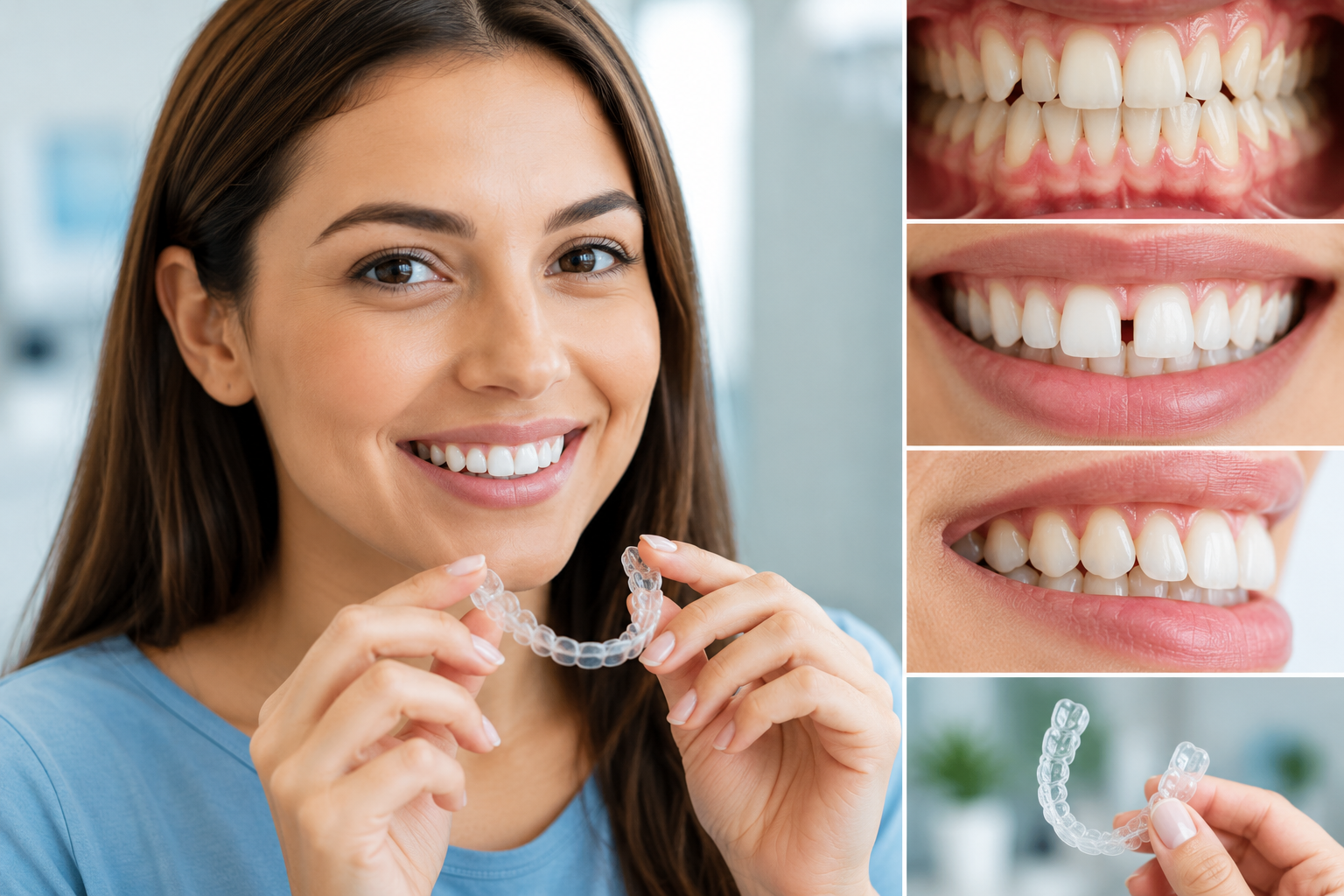
A straight, healthy smile can make a huge difference in both appearance and confidence. However, many people hesitate to pursue orthodontic treatment because they do not want the discomfort or visibility of traditional metal braces. Invisalign has become one of the most popular alternatives because it offers a more discreet, comfortable, and convenient way to straighten teeth.
Many patients assume Invisalign is only designed for mild cosmetic adjustments, but modern Invisalign treatment can address a wide range of orthodontic concerns. From crowded teeth and gaps to bite alignment issues, Invisalign has evolved into an advanced treatment option capable of correcting many common dental problems.
If you have been wondering whether Invisalign is right for you, understanding what it can actually fix may help you decide.
What Is Invisalign?
Invisalign is a clear aligner system used to gradually move teeth into better alignment. Instead of brackets and wires, Invisalign uses a series of transparent custom-made trays that fit snugly over the teeth.
Each set of aligners is worn for a specified period before switching to the next set in the series. Over time, the aligners gently shift teeth into their ideal positions.
One of the biggest advantages of Invisalign is its nearly invisible appearance. The aligners are clear, removable, and designed to fit comfortably into daily life.
How Invisalign Works
The Invisalign process begins with a consultation and digital scanning of the teeth. Advanced imaging technology creates a customized treatment plan showing how the teeth will move over time.
Once the aligners are created, patients wear them for approximately 20–22 hours per day, removing them only for:
- Eating
- Drinking anything other than water
- Brushing
- Flossing
Because the aligners are removable, maintaining oral hygiene is often easier compared to traditional braces.
The treatment process varies depending on the complexity of the case, but many patients begin noticing changes within a few months.
Can Invisalign Fix Crowded Teeth?
Yes — crowding is one of the most common issues Invisalign can successfully correct.
Crowded teeth occur when there is not enough space in the jaw for teeth to align properly. As a result, teeth may overlap, twist, or become difficult to clean.
Crowding is not only a cosmetic concern. Misaligned teeth can also:
- Increase plaque buildup
- Make brushing and flossing harder
- Raise the risk of cavities and gum disease
- Cause uneven tooth wear
Invisalign gradually creates better spacing and alignment, helping improve both appearance and oral health.
Mild to moderate crowding is often highly treatable with Invisalign. In more severe cases, additional orthodontic planning may sometimes be required.
Can Invisalign Close Gaps Between Teeth?
Invisalign is also commonly used to close spaces or gaps between teeth.
Some people naturally develop gaps due to genetics, while others may experience spacing caused by missing teeth, gum disease, or shifting teeth over time.
Gaps between teeth can:
- Affect smile aesthetics
- Trap food particles
- Contribute to gum problems
- Impact bite alignment
Invisalign aligners apply controlled pressure to gradually move teeth closer together and reduce unwanted spacing.
Many patients choose Invisalign specifically because it provides a discreet way to improve smile symmetry without noticeable braces.
Can Invisalign Correct Overbite?
An overbite occurs when the upper front teeth excessively overlap the lower front teeth. While slight overlap is normal, a significant overbite may lead to:
- Jaw discomfort
- Tooth wear
- Speech issues
- Chewing difficulties
- Increased risk of dental damage
Invisalign can often correct mild to moderate overbites by carefully repositioning the teeth and improving bite alignment.
Modern Invisalign systems use advanced planning tools and attachments that allow for more precise tooth movement than earlier aligner technologies.
Correcting an overbite not only improves appearance but may also help reduce strain on the jaw and teeth.
Can Invisalign Fix Underbite?
An underbite occurs when the lower teeth extend in front of the upper teeth. This can affect facial balance and create difficulties with:
- Chewing
- Speaking
- Jaw function
Invisalign may help correct certain underbite cases, especially when the issue is mild to moderate and primarily related to tooth positioning rather than skeletal structure.
For severe jaw alignment issues, additional orthodontic or surgical treatment may sometimes be recommended.
Can Invisalign Treat Crossbite?
A crossbite occurs when some upper teeth sit inside the lower teeth instead of outside. This misalignment can cause:
- Uneven tooth wear
- Gum recession
- Jaw discomfort
- Increased tooth sensitivity
Crossbites may affect one tooth or multiple teeth. Invisalign can often help reposition teeth into healthier alignment and reduce long-term complications caused by improper bite relationships.
Can Invisalign Help with Open Bite?
An open bite happens when the upper and lower teeth do not properly touch when the mouth is closed.
This condition may lead to:
- Difficulty biting into food
- Speech challenges
- Excess pressure on certain teeth
Invisalign can sometimes help close open bites by guiding teeth into better vertical alignment. Treatment success depends on the severity and cause of the condition.
Advantages of Invisalign Over Traditional Braces
Many patients prefer Invisalign because it offers several lifestyle advantages compared to traditional braces.
Nearly Invisible Appearance
The clear aligners are discreet and difficult for others to notice, making Invisalign popular among adults and teens.
Removable Convenience
Patients can remove aligners while eating and brushing, allowing greater flexibility and easier oral hygiene.
Comfortable Fit
Smooth plastic aligners eliminate the irritation that metal brackets and wires may sometimes cause.
Fewer Dietary Restrictions
Unlike braces, Invisalign does not require avoiding sticky or hard foods because the aligners are removed during meals.
Predictable Digital Planning
Advanced technology allows patients to preview expected results before treatment even begins.
Is Invisalign Right for Everyone?
While Invisalign can successfully treat many orthodontic concerns, not every case is ideal for clear aligners.
The best way to determine candidacy is through a professional dental evaluation. Factors such as:
- Severity of misalignment
- Bite complexity
- Jaw structure
- Patient compliance
all influence treatment success.
Because Invisalign aligners are removable, patients must commit to wearing them consistently for the recommended number of hours each day. Skipping wear time can slow progress and affect results.
The Importance of Early Orthodontic Care
Orthodontic concerns are not always purely cosmetic. Misaligned teeth and bite problems can contribute to:
- Tooth wear
- Gum disease
- Jaw strain
- Difficulty cleaning teeth
- Speech issues
Addressing these concerns early can improve both oral health and long-term dental stability.
Modern Invisalign treatment allows many patients to improve alignment comfortably without the appearance of traditional braces.
A More Confident Smile Starts with the Right Treatment
Straightening teeth is about more than appearance alone. Proper alignment can improve oral health, bite function, comfort, and confidence.
Whether you are dealing with crowded teeth, gaps, overbite, crossbite, or other alignment concerns, Invisalign may provide a discreet and effective solution tailored to your needs.
At J Dental Care, patients receive personalized orthodontic evaluations to determine whether Invisalign is the right option for their smile goals. With modern technology and customized treatment planning, achieving a straighter smile has become more comfortable and convenient than ever.
If you are ready to improve your smile without traditional braces, schedule a consultation today and discover how Invisalign can transform your confidence and oral health.


